Visita al jardín de Grow More Good
September 6, 2025
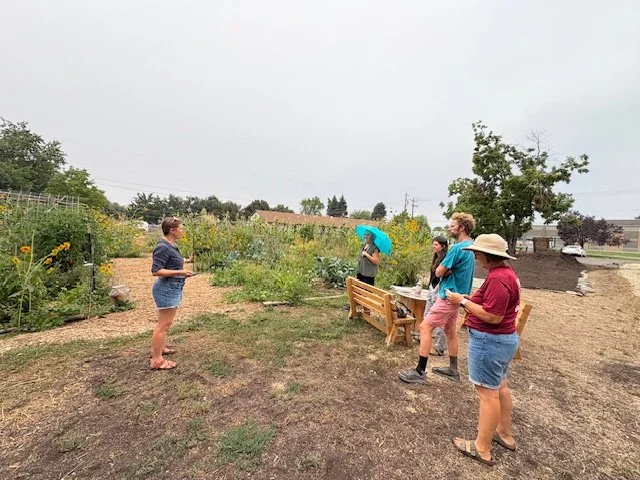
The Grow More Good Community Garden welcomed visitors for a rainy Saturday tour — one umbrella in sight, but mostly just grateful faces soaking in the cooler weather. A few had forgotten their new “garden passport” stamp books (a playful experiment we’re trying out this season), but the promise of stamps — and eventual prizes — still sparked smiles as the tour began.
The Short Version
What began in 2021 as a field of chicory taller than the students who first volunteered here has steadily transformed into a community resource. The first Hugelkultur rows were dug with One Stone students and fueled by free landscaping clippings. Early donations from Hawly Troxell helped buy hoses and tools, and the site quickly became a gathering point for experiments in soil health, intergenerational learning, and food sharing.
“By that first October, we’d harvested nearly 300 pounds of tomatoes,” one founder recalled. “It felt like proof we could grow something real together.”
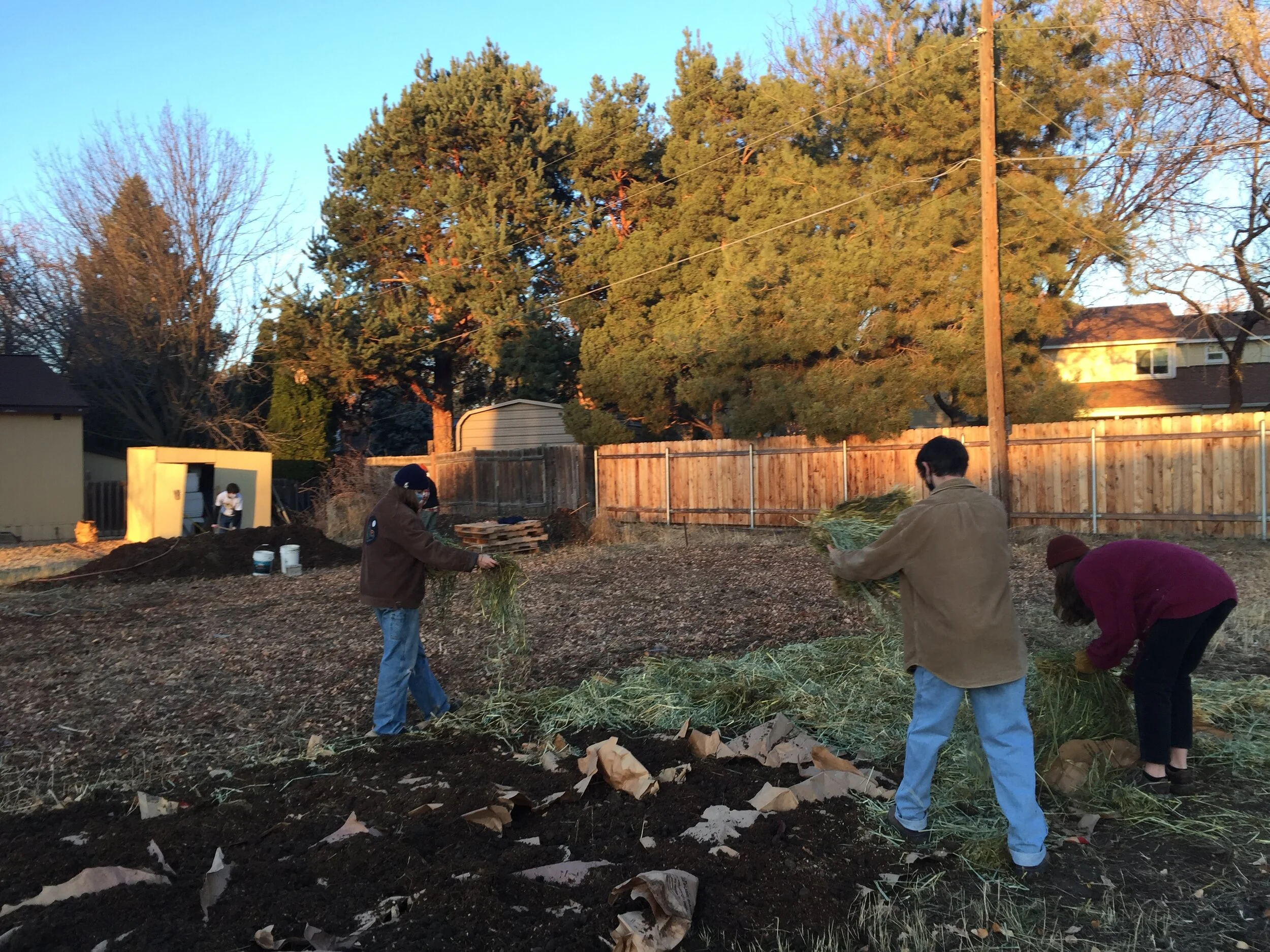
The 1st Lasagna Gardening at the Grow More Good Garden
Tour grocks the shared space of the garden.
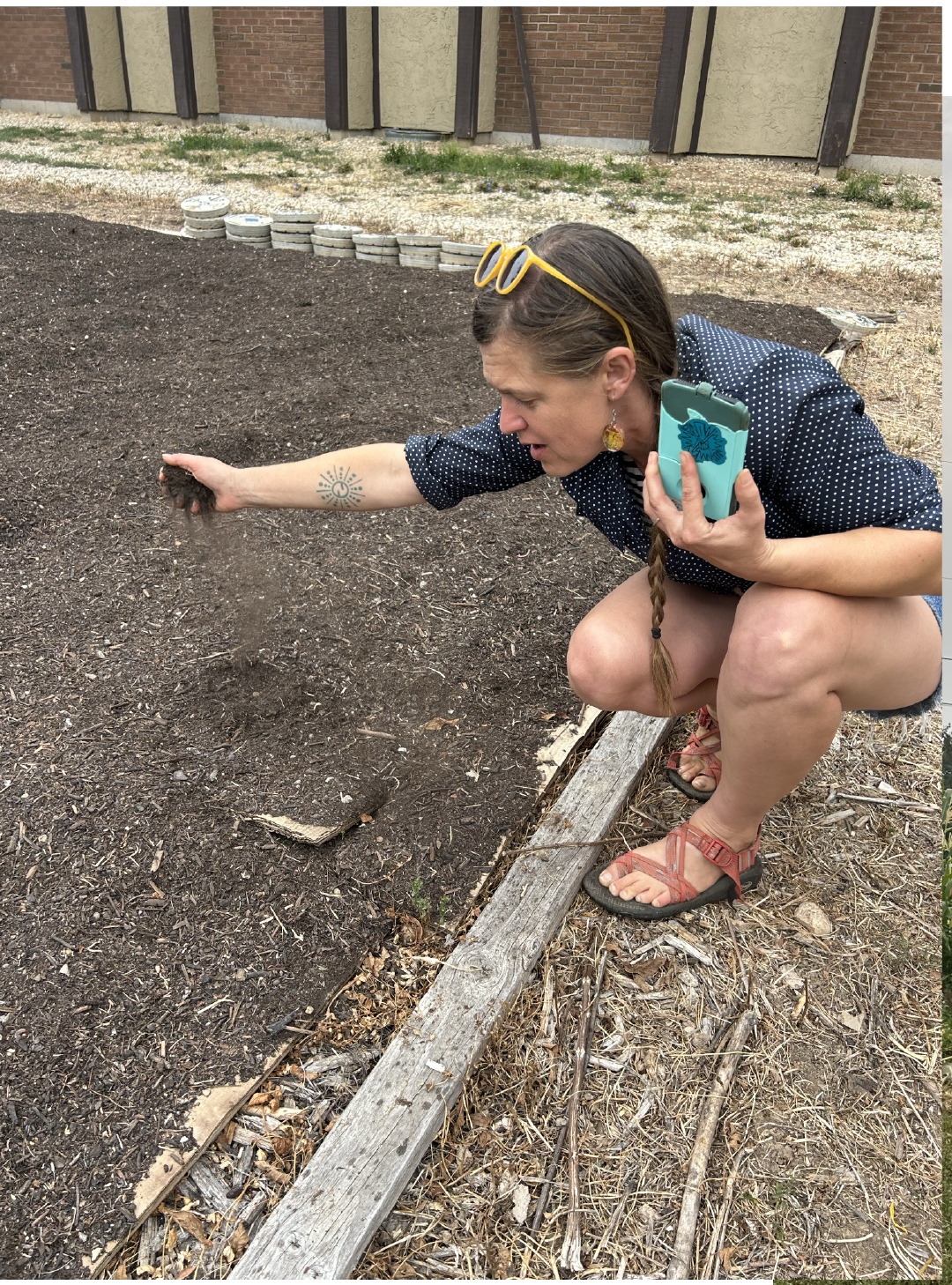
Mary K talking about city compost and methods for integrating it in the garden.
Families & Intensive Growing
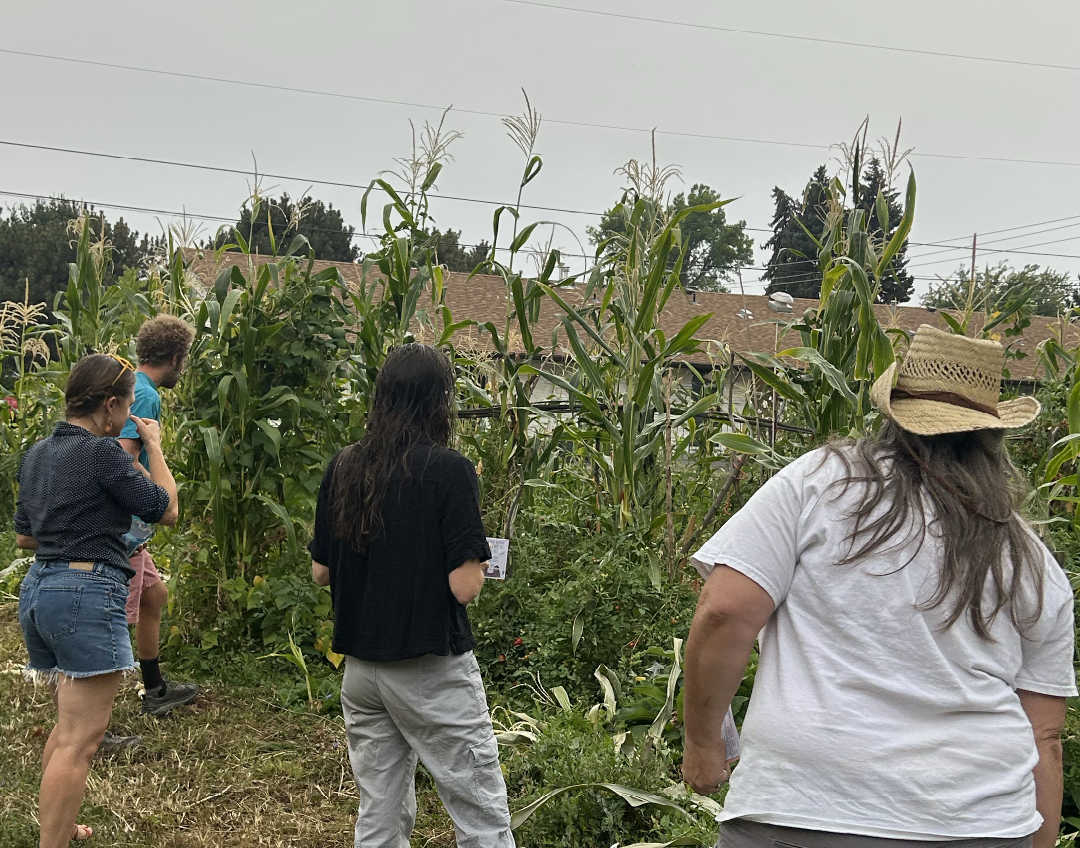
Today, two-thirds of the site is cultivated by three new American families, whose intercropping blends tomatoes, beans, kale, and corn into tightly woven rows. Tour participants marveled at the abundance, calling it “incredible” and a master class in weeds.
“I like the wildness of this place,” one attendee observed. “It feels more realistic than a perfectly tidy garden.”
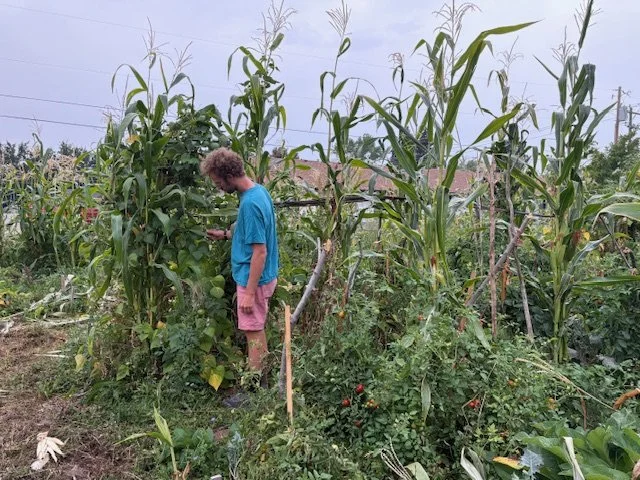
Jordi checking out the companion planted corn and beans in the shared garden space.
The families describe their efforts as subsistence farming, growing for a large web of relatives and kin. Their rows stand as both nourishment and cultural continuity. In terms of ending hunger, gardeners who’ve relocated to the sanctuary city of Boise over the years are checking off a number of goals in efficient and inspiring ways. Read more about that from our tour of the Liberty Park Community Garden earlier this season.
Soil, Compost & Problem-Solving
Challenges remain — especially what to do with weeds and the sheer volume of organic matter. The lack of funding for city compost pickup sparked lively brainstorming: could community gardens share a chipper-shredder, rotate volunteers with a skid steer, or partner with local arborists?
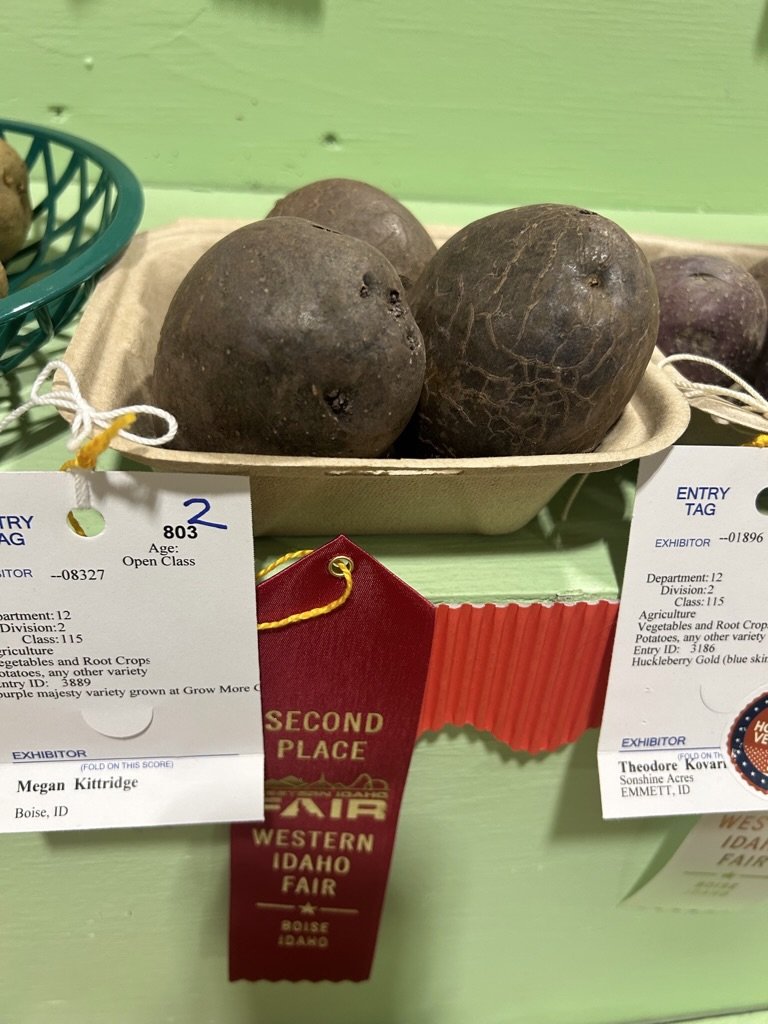
Despite hurdles, creative composting has already paid off. Potatoes grown in above-ground layers of cardboard, wood chips, and city compost won a 2nd Place ribbon at the fair. “It was our best potato year ever,” one gardener said with pride.
Student Voices & Learning
One of the most meaningful aspects of Grow More Good is how it connects students, gardeners, and neighbors across generations. While we have the potential to reach hundreds of students through Fairmont Jr. High and One Stone, in practice only a handful have been able to consistently participate directly in the garden, so far. Between after-school jobs, extracurriculars, and family responsibilities, students today often carry more than we realize.

Seed starts and winter sown jugs at Fairmont Spring 2024
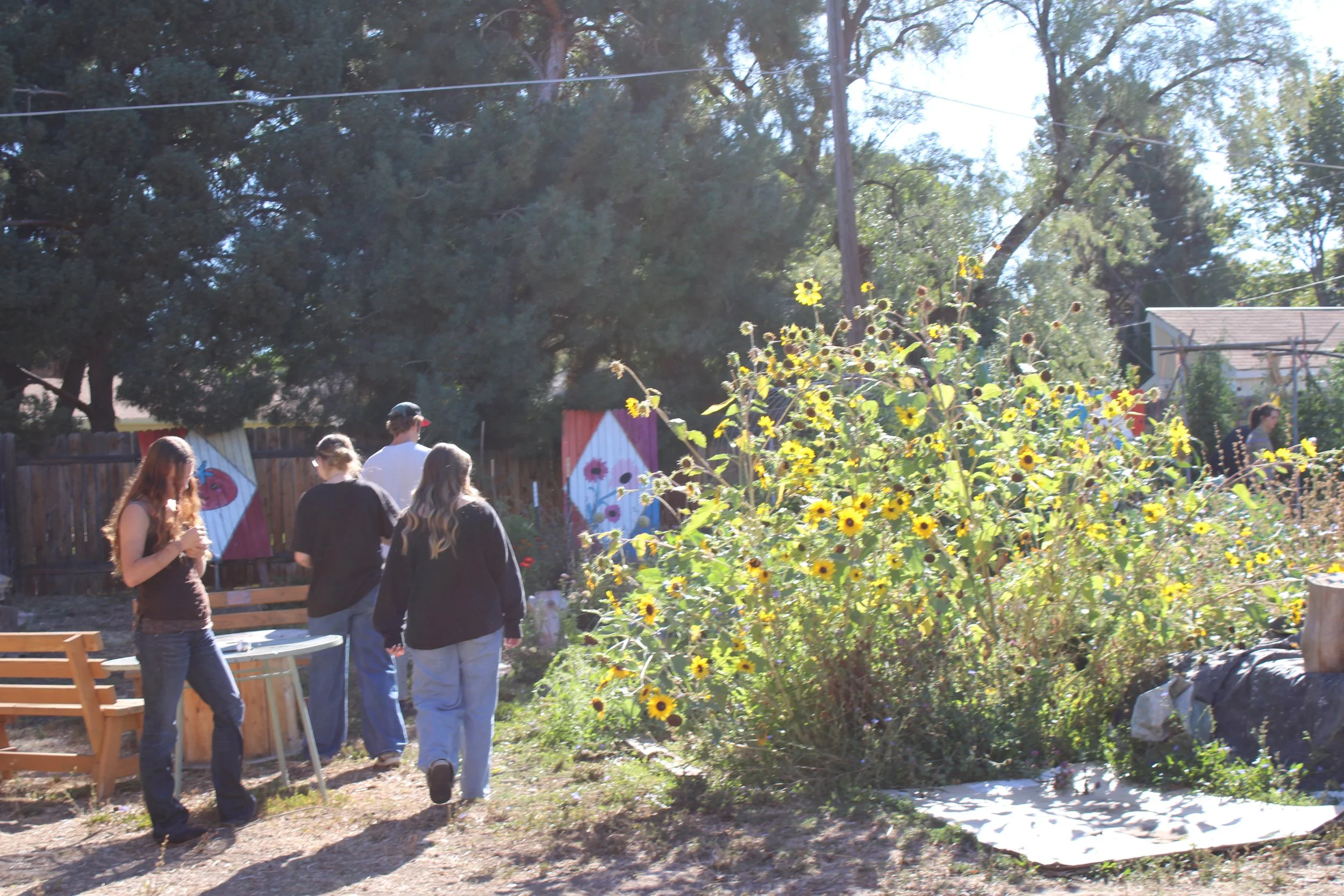
Garden meander 2 - photo by Lilliana
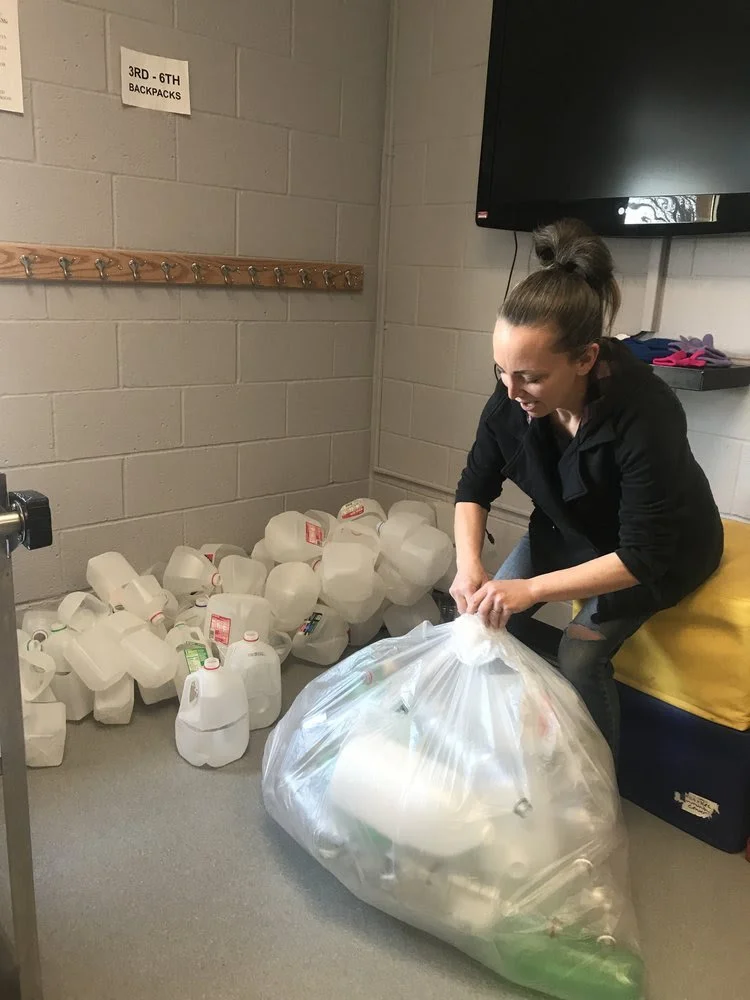
Julia with a GAMUT of jugs ready to sow at Grace Jordan Elementary - 2024
Still, each season we see how even short encounters plant seeds — sometimes literally, sometimes in ways that may not show for years.
Dawn, a Fairmont science teacher, has pivoted her lessons into 15–20 minute sessions that fit within the school day. She recalls the joy of sharing ground cherries and sunflower seeds: “It doesn’t come from a textbook. Watching kids crack open a sunflower head and discover food inside — that’s the treasure of having the garden across the street.”
Jordi, with One Stone, noted how springtime discoveries bring students alive: garlic bulbs under the soil, onion shoots breaking through, tiny greens popping up. “Even kids who struggle in the classroom light up out here. They may not want to read about seeds, but they’ll spend the whole time digging in the dirt.”
School-wide winter sowing projects — something we’ve been doing for years, and which Julia Sanderson has championed across the Boise School District — have helped hundreds of students get their hands in the soil.

January 2022, a lightly edited photo of the One Stone Garden Crew with winter sown jugs!
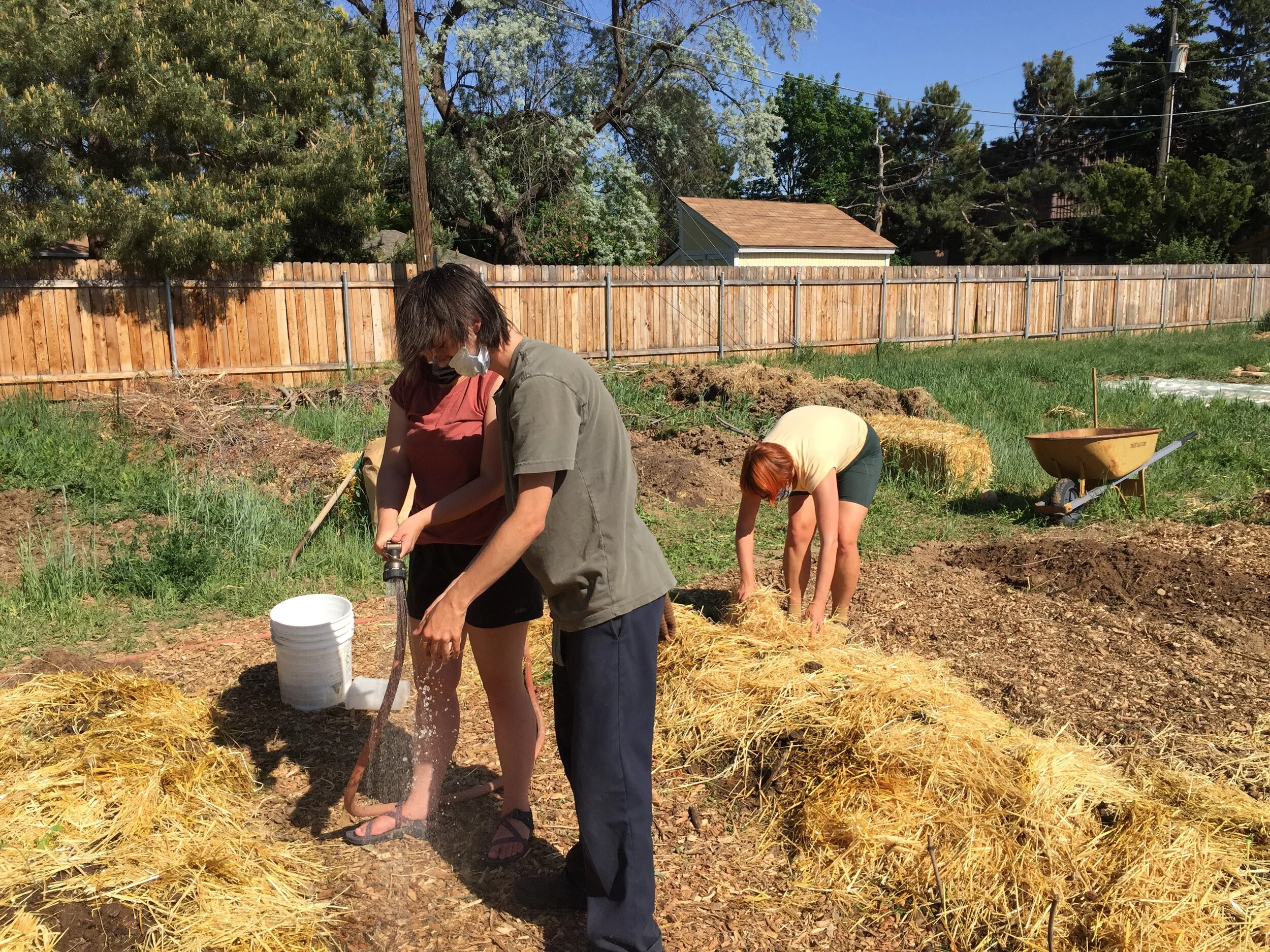
2021 tending the hugels

First takers, students from One Stone 2020 breaking ground at the Grow More Good Garden, practicing shovel-as-pogo method.
Imagining the perspective of youth, the future could feel like a narrowing corridor. Summers marked by smoke, rising costs, and shrinking options can create a sense of helplessness — what many call climate anxiety. In that landscape, the garden stands as a real option: one that produces food, strengthens soil, and brings people together. It’s not effortless; it takes a lot of work. But it’s work that matters.
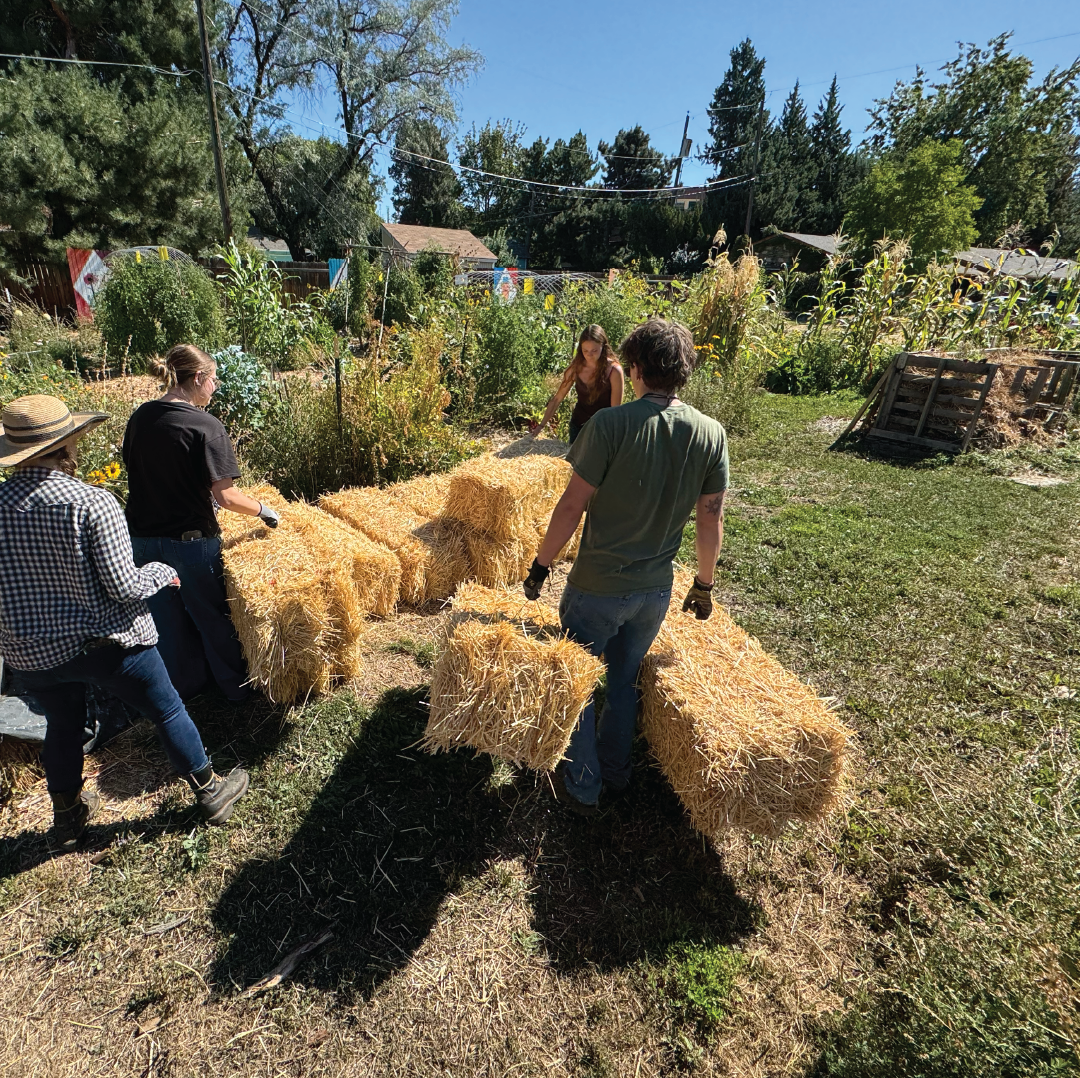
Unloading straw bales 2025 with the One Stone fall Deep Dive
Those of us tending this space with our educational partners feel a sense of generational responsibility to keep it open. Opportunities for kids to learn, grow, and connect shouldn’t be so scarce — but for now, this is what we have, and we can hold it together. And in doing so, we plant seeds, share food, and grow more good.

Food Sharing & Joy
This season also marked the launch of a trial weekly produce pick-up, sharing tomatoes, cucumbers, kale, and potatoes with neighbors and partners. The joy of giving away harvests revived a sense of abundance for many gardeners.
“The hunt for the cucumber is joyous again — because I’m going to give it to people.”
From fuzzy Wapsipinicon Peach tomatoes to purple potatoes and raspberries finally coming into their own, Grow More Good showed off both its quirks and its capacity.
Looking Ahead
As the garden moves into fall, seed saving and soil building are front of mind. Partnerships with Fairmont Jr. High and One Stone ensure that students — whether a handful or a whole cohort — will continue to get their hands in the dirt, carrying forward both the science and the stories of this place.
This was the last tour of the season — but stay tuned for the 2026 Green Space Garden Mixer. Ready your stamp books and prepare for a gift.
🌻 Special thanks to all tour participants for braving the rain, sharing perspectives, and reminding us that gardens grow stronger when we hold space for one another, across generations.